

Archive

Archive for the ‘News’ Category

Do you need Allied Health support?

Did you know that if you are aged over 65 and living in Brisbane you might be eligible for Allied Health assistance? This could be from the Government, or for help from a health professional, at home and on a day and at a time that suits you. We at Jubilee Community Care can explain the available support options and help to navigate the system for you.

There are numerous Allied Health services that we can offer such as podiatry (foot care) or occupational therapy (help to recover, or maintain your physical ability). These help you to stay as active and healthy as you can be. Allied Health Brisbane of course covers a wide range of healthcare practices to help diagnose, treat and rehabilitate those in need. Allied health professionals enable access to a broader range of diagnostic, technical, therapeutic and direct health services when required, to help improve both the health and wellbeing of clients.

Allied Health Brisbane – what’s available:

The types of Allied Health that are available in addition to our Brisbane home help services include:

  • physiotherapy (exercise, mobility, strength and balance)
  • speech pathology (help with difficulties in communicating, swallowing and eating)
  • occupational therapy (help to recover or maintain your physical ability)
  • podiatry (foot care)
  • dietitian (nutrition assessment, food and nutrition advice, dietary changes)
  • exercise physiologists (physical activity and education to assist with managing chronic conditions such as diabetes and heart disease).

Based in in Indooroopilly and servicing the western suburbs of Brisbane, Jubilee Community Care will gladly talk you through the types of allied health that you might be entitled to as a local resident, with absolutely no cost to you. Call us on 07 3871 3220 to get you or your loved ones back on track, to discuss the range of available services, and also to find out what Government support you may be entitled to.

Allied Health Brisbane


Congratulations Michael

Michael has been a client of Jubilee for 4 years. Last month he qualified for two yellow bands in Taekwondo!

This Korean martial art is characterised by its emphasis on head-height kicks, jumping and spinning kicks. It is a passion of Michael’s and we’re all very proud of this achievement!


102 years of age and 24 years of support from us

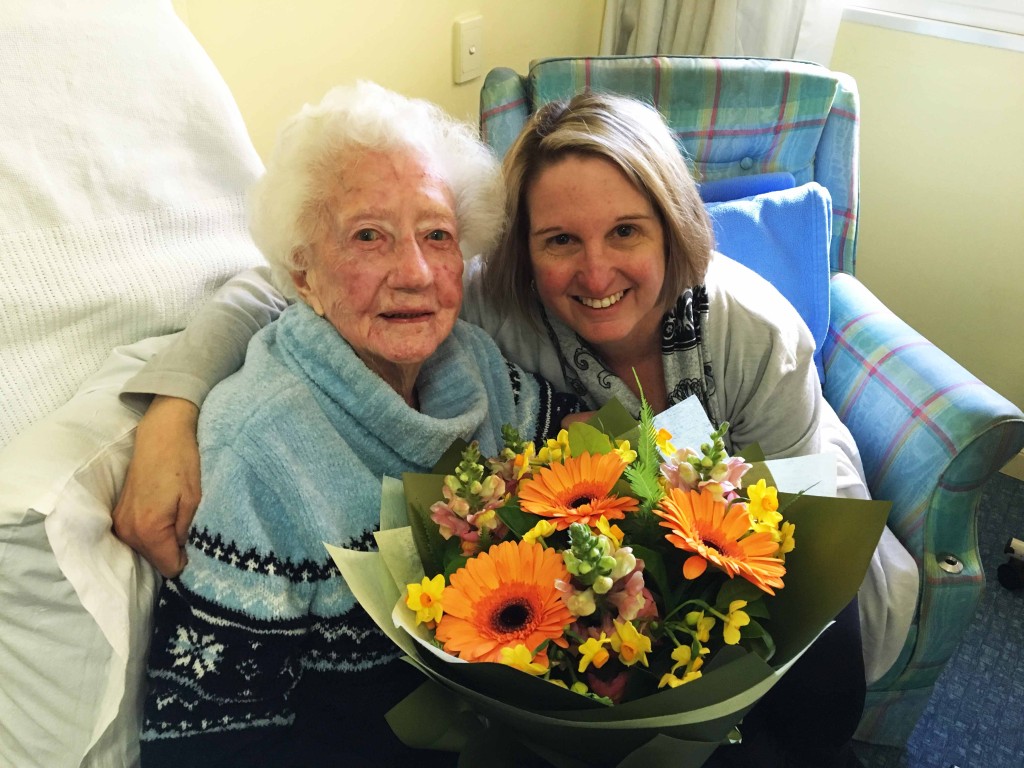
Mrs Quinn, veteran widow and a client of ours for just under a quarter of a century is going in to residential care near her family on the Fraser Coast just before her 103rd birthday. Much to Mrs Quinn’s disappointment as she doesn’t want to leave her home yet but she is pleased that she’ll see her family more often.

Mrs Quinn became a client of Jubilee Community Care after having a fall and breaking her hip. In order for her to return home, her family engaged our services. 24 years on, we were still a part of Mrs Quinn’s life and her of ours.

Everyone at Jubilee knows Mrs Quinn and the stories are full of warmth and laughter. Pam, our Finance Administrator Assistant, who has been with us 10 years, bonded with Mrs Quinn when she was a care worker for her as they both wore the perfume “Paris”. Our Client Support Manager Nicky, who is celebrating 9 years with Jubilee this year, was also Mrs Quinn’s care worker and then her coordinator. Nicky has only fond things to say about the wonderful centenarian.

“Mum became very attached to some of her carers and on the other hand was not backward in letting us know that she didn’t like some others. I was always told that someone was coming from Jubilee, so not to park my car in the carport. Her 100th birthday was a great celebration and I would like to thank Jubilee for their participation on that happy occasion. We have a wonderful book of memories prepared and printed by your organisation. She is really amazing for her age and we are only too happy to recommend Jubilee Community Care for their care for nearly a quarter of a century, in which time some dozen or more carers have been involved with Mrs Veronica Mary Quinn. Once again thank you for your care and interest.” ~ Suzanne, Mrs Quinn’s daughter.

We will all miss her greatly but wish Mrs Quinn and her family all the best! Thank you for being part of Jubilee’s history Mrs Quinn.

MrsQuinnwithNickysmall


Chronic Illness Management

Are you or your loved one struggling with a chronic illness or need a bit of assistance?

All of our staff are trained as part of our extensive training program on how to help manage these because 1 in 5 Australians are affected by multiple chronic illnesses and about half of our population have a chronic disease. These include arthritis, asthma, back problems, cancer, chronic obstructive pulmonary disease, cardiovascular disease, diabetes and mental health conditions.

‘When two or more diseases occur at the same time, it is referred to as ‘comorbidity’, said Australian Institute of Health and Welfare spokesperson Louise York. ‘Sometimes these diseases occur together simply by chance, but often it’s because there are some associations between them, such as shared risk factors.’

Ageing is a factor that has a particularly strong association with comorbidity.

Here are some more statistics to help understand how common chronic illnesses are and how they affect our community:

– Over 1 in 5 Australians age 18+ (22% of Australians) reported having Cardiovascular disease.
– 1 in 10 Australians aged 18+ (10%) had biomedical signs of Chronic Kidney Disease in 2011–12, with the majority of these showing early signs of the disease.
– 1 in 19 Australians (5.4%) had diabetes in 2011–12.
– In 2013–14, 1 in 7 children aged 4–17 (14%) were assessed as having mental health disorders in the previous 12 months.
– Over 1 in 4 Australians (28%) reported having arthritis and other musculoskeletal conditions in 2011–12. The most prevalent conditions were back problems, osteoarthritis, osteoporosis and rheumatoid arthritis.
– 3 in 10 Australians aged 25–44 had untreated tooth decay in 2004–06.
– 1 in 10 Australians (10%) reported having asthma in 2011–12. This rate is significantly lower than the rate of 11.6% in 2001.

Chronic diseases can range from mild to more significant conditions and as the above statistics show, these are quite common in our communities.

For these reasons, Jubilee Community Care train all of our staff to be able to recognise the signs, be informed about and help with chronic illness management. If we can help improve your daily life – we will!

Speak to our office or to your support worker if you would like more help or information.


Want to know more about dementia?

dementia
noun
a chronic or persistent disorder of the mental processes caused by brain disease or injury and marked by memory disorders, personality changes, and impaired reasoning.
synonyms: mental illness, madness, insanity, derangement, lunacy.

Dementia affects thinking, behaviour and the ability to perform everyday tasks. Brain function is affected enough to interfere with the person’s normal social or working life. Dementia can happen to anybody, but it is more common after the age of 65 years. People in their 40s and 50s can also have dementia. The most common types of dementia are Alzheimer’s disease, Vascular dementia, Parkinson’s disease, Dementia with Lewy bodies, Fronto Temporal Lobar Degeneration (FTLD), Huntington’s disease, Alcohol related dementia (Korsakoff’s syndrome) and Creutzfeldt-Jacob disease.

There are more than 353,800 Australians living with dementia. Three in ten people over the age of 85 and almost one in ten people over 65 have dementia. An estimated 1.2 million people are involved in the care of a person with dementia. Dementia is the second leading cause of death in Australia and there is no cure.

~ Alzheimer’s Australia.

So what do you do if you suspect your loved one has dementia?

Wicking Dementia Research and Education Centre, which is part of the University of Tasmania’s Faculty of Health have developed a free online course, which goes for three months. It attracted more than 22,000 enrolments in 2015 and more than 70,000 people from around the world have participated over the last three years.

The MOOC model is a modern, online form of education, and Understanding Dementia has no assignments or exams and an emphasis on interaction through mediums including discussion boards.

The course is divided into three sections: ‘The Brain’, ‘The Disease’ and ‘The Person’.

“We were a bit worried that all the brain science would switch people off, but it was actually quite to the contrary, people actually found they learnt a lot from that,” Professor Vickers, Wicking Centre co-director, said.

While some university courses seem to take up huge portions of time, the Understanding Dementia course expectations require students to dedicate about three hours a week to the course. Pupils that complete the MOOC’s three units can request a certificate of completion. Despite no formal assessments, students can gage their knowledge through weekly quizzes. The accessible course generates interest in a wide range of students, including health professionals and policy makers, community and residential support staff, people interested in dementia, and people in the early stages of the disease.

“At the moment we don’t teach enough about it [generally], even in our own health courses, and it’s sort of a growing phenomenon as well, people want to know more about it,” Professor Vickers said.

Following the success of the Understanding Dementia course in recent years, the Wicking Dementia Research and Education Centre developed a complementary MOOC called Preventing Dementia.

The new MOOC was launched on Wednesday June 1, and Professor Vickers said it was a practical, informative way for people to learn how they could prevent dementia for themselves.

Preventing Dementia, which lasts five weeks, explores innovative research about the degenerative condition’s links to potentially modifiable factors.

Professor Vickers said it had recently been determined that about 30 per cent of dementia cases could be prevented.

Would you like to find out more about the course? Click here>>

If you would like some help with your loved one. We train our Support Workers on how to help manage chronic diseases so feel free to call 07 3871 3220 or email us.

*Source: theexaminer.com.au